

Psoas major: the muscle that runs from the lumbar spine to the thigh bone
It comes up every time "anterior pelvic tilt" is discussed. What has research actually shown?
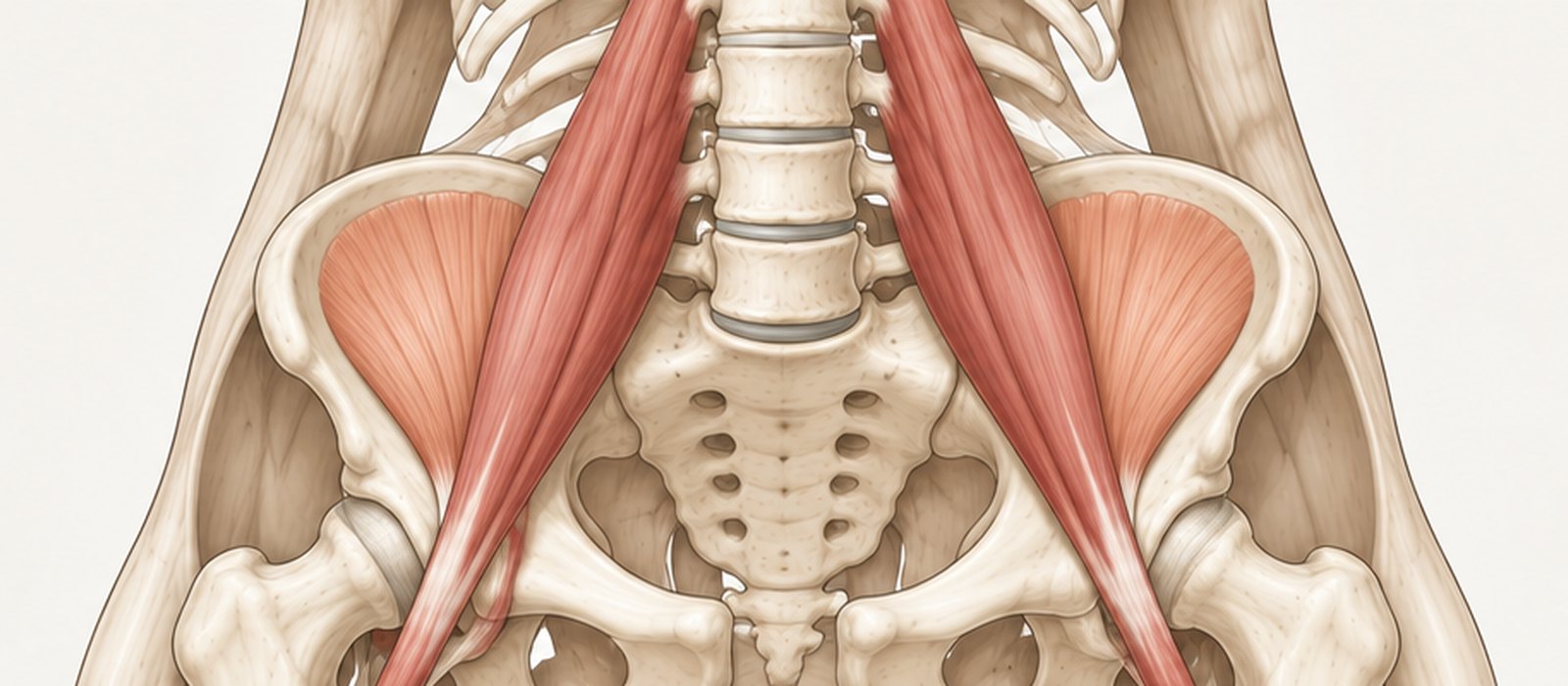
- The psoas major starts at the front of the lumbar spine, passes in front of the pelvis and attaches to the inner thigh bone. It is the main muscle that lifts the thigh.
- "When it shortens, it tips the pelvis forward" is a common claim, but the changes measured in research were small, around 1–2 degrees.
- So rather than stretching this one muscle alone, it makes sense to assess and manage it together with the glutes and abdominal muscles.
- If low back or groin pain comes with fever, leg weakness or trouble controlling urine or stool, see a doctor first.
Whenever back pain or pelvic posture comes up, the psoas major is almost always mentioned. It is an unusual muscle: it starts on the lumbar spine and ends on the thigh bone.
Where is the psoas?
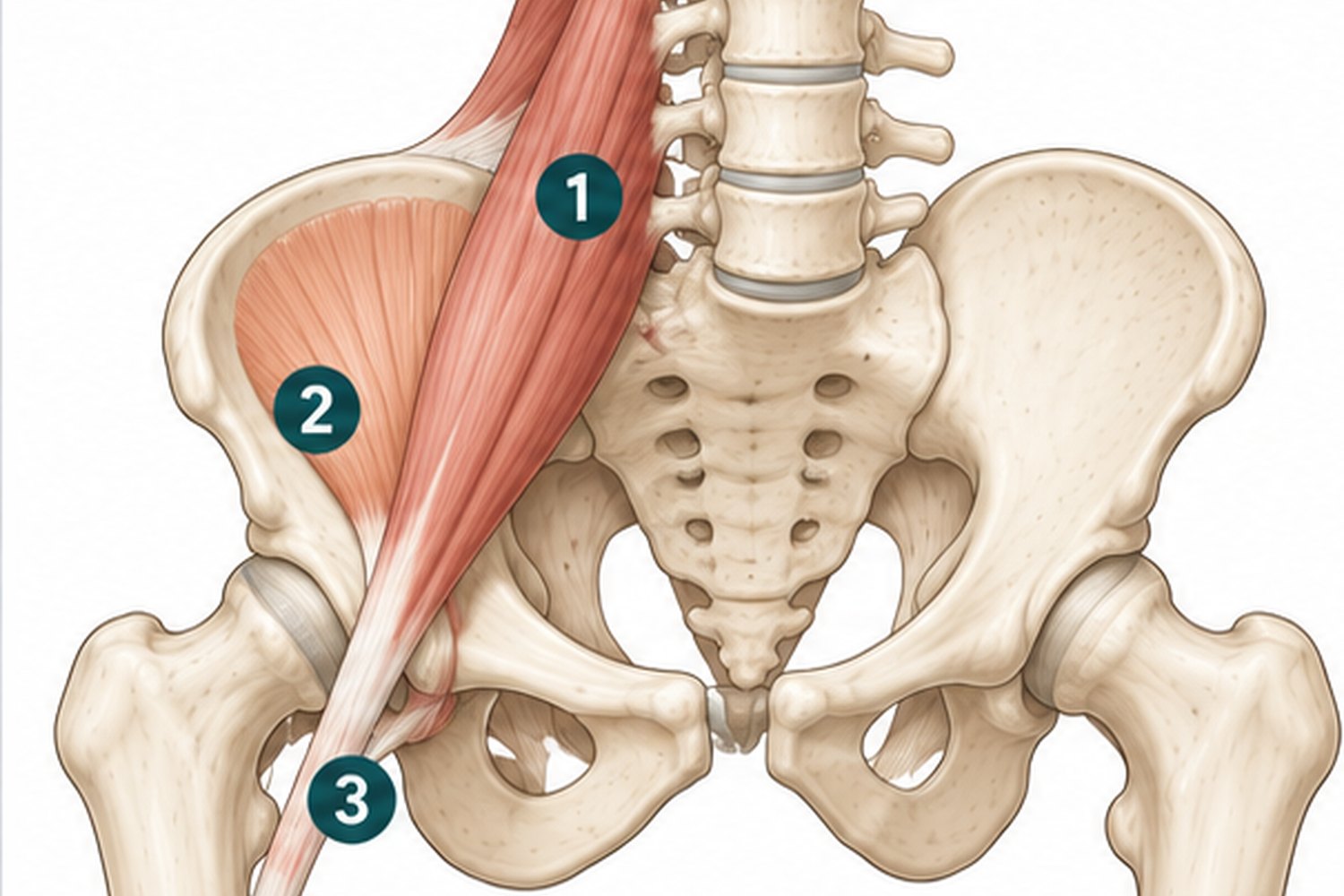
It lies deep in the abdomen, right beside the lumbar vertebrae, so it can't be felt directly from the back. In the pelvis it joins the iliacus and both attach at the same spot on the femur, which is why the pair is often called the iliopsoas.
- Origin: front of the lumbar transverse processes, the vertebral bodies and discs
- Course: down along the spine, then in front of the pelvis and hip joint
- Insertion: the lesser trochanter on the inner femur, shared with the iliacus
- Main role: hip flexion — lifting the thigh forward (Sajko and Stuber, 2009)
The psoas in "lower crossed syndrome"
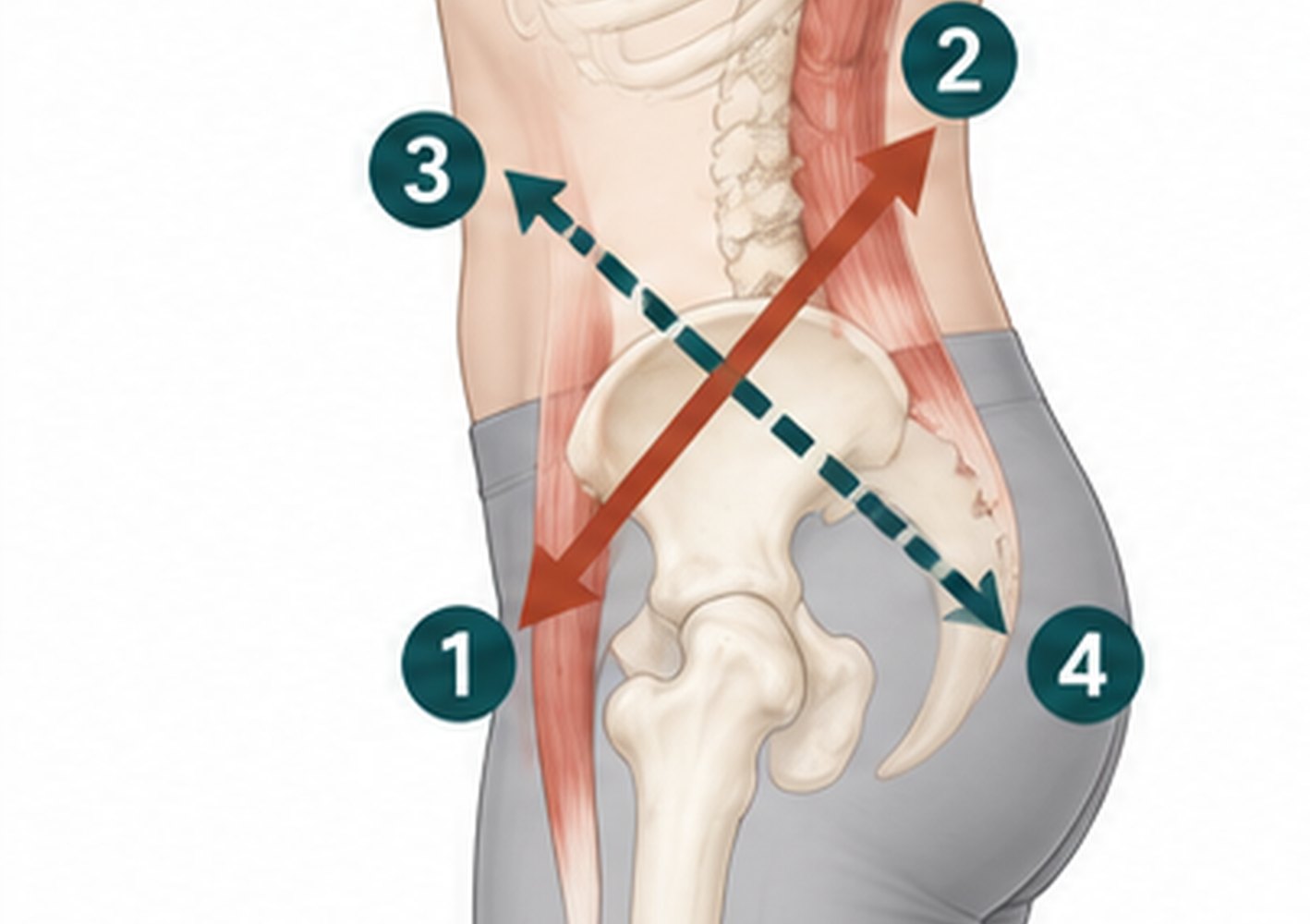
Czech neurologist Vladimir Janda described an imbalance pattern called lower crossed syndrome. In this model, the hip flexors and lumbar erector spinae tend to tighten while the abdominals and glutes tend to weaken. The two diagonals meet at the lumbosacral region and are said to tip the pelvis forward and increase the lumbar curve.
The model also holds that a tense iliopsoas inhibits the gluteus maximus, which works in the opposite direction at the hip. So it recommends releasing the tight muscles first, then waking up the weak ones.
It's a useful framework, but a simplified one. The link between posture and pain varies a great deal from person to person.
What did research show?
In 2021, Preece and colleagues gave 23 healthy men a single session of hip flexor stretching. Stretching can shift the pelvis, but only a little. How much a person's hip extension improved also wasn't clearly related to how much their pelvis changed. Pelvic posture is shaped by many factors at once, not by one muscle.
- +2.6° — hip extension range after one stretching session (Preece et al., 2021)
- −1.2° — anterior pelvic tilt in standing, same study
- No change — lumbar curve
What an assessment usually looks at
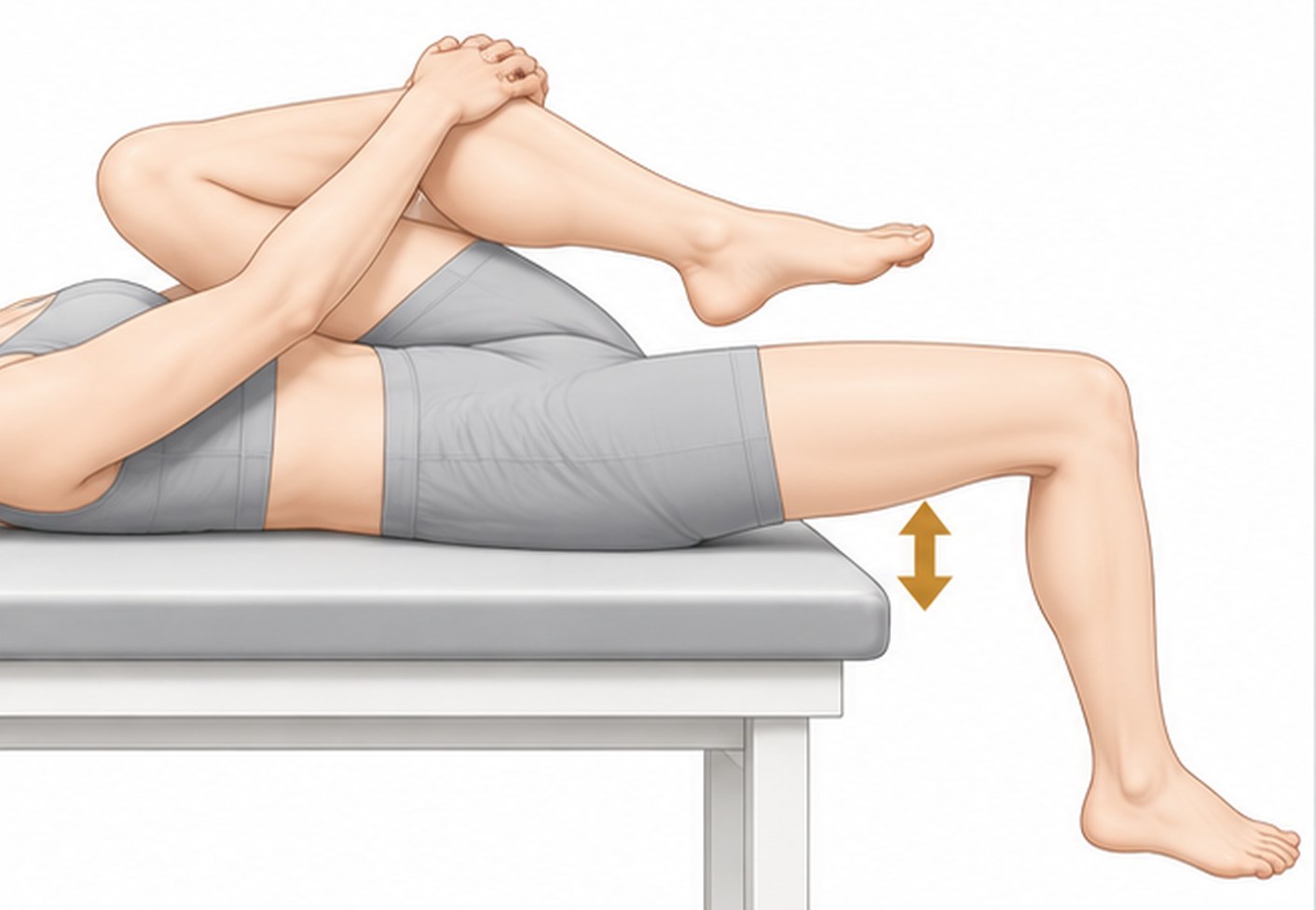
- ① Standing posture: pelvic tilt, lumbar curve, side-to-side differences
- ② Thomas test: hip flexor length; the knee angle of the hanging leg gives a clue about the rectus femoris
- ③ Prone hip extension: normally the glutes switch on first. If the hamstrings and back muscles fire first, the glutes are lagging.
- ④ Curl-up: whether the abdominals lead, or the hip flexors pull and the lower back lifts
- Low back or groin pain comes with fever and keeps getting worse
- Your leg becomes weak, numbness keeps spreading, or you have trouble controlling urine or stool
- Pain starts after a fall or a hard impact
- You feel a lump in the groin that gets bigger when you cough or strain
- There is unexplained weight loss, or pain at night that doesn't ease when lying down
If any of these apply, please see a doctor first. The first two items may need prompt attention.
The psoas matters, but it doesn't decide pelvic posture on its own. If you're told "this muscle is short," also ask how your glutes and abdominal muscles are working.