

Topic 01
Scoliosis
Scoliosis is a sideways curve of the spine that also involves rotation. How it is managed depends on the size of the curve and the stage of growth; common options include exercise, daily habits, and regular re-checks, or treatment by a specialist. For an accurate assessment and diagnosis, see a qualified healthcare professional.
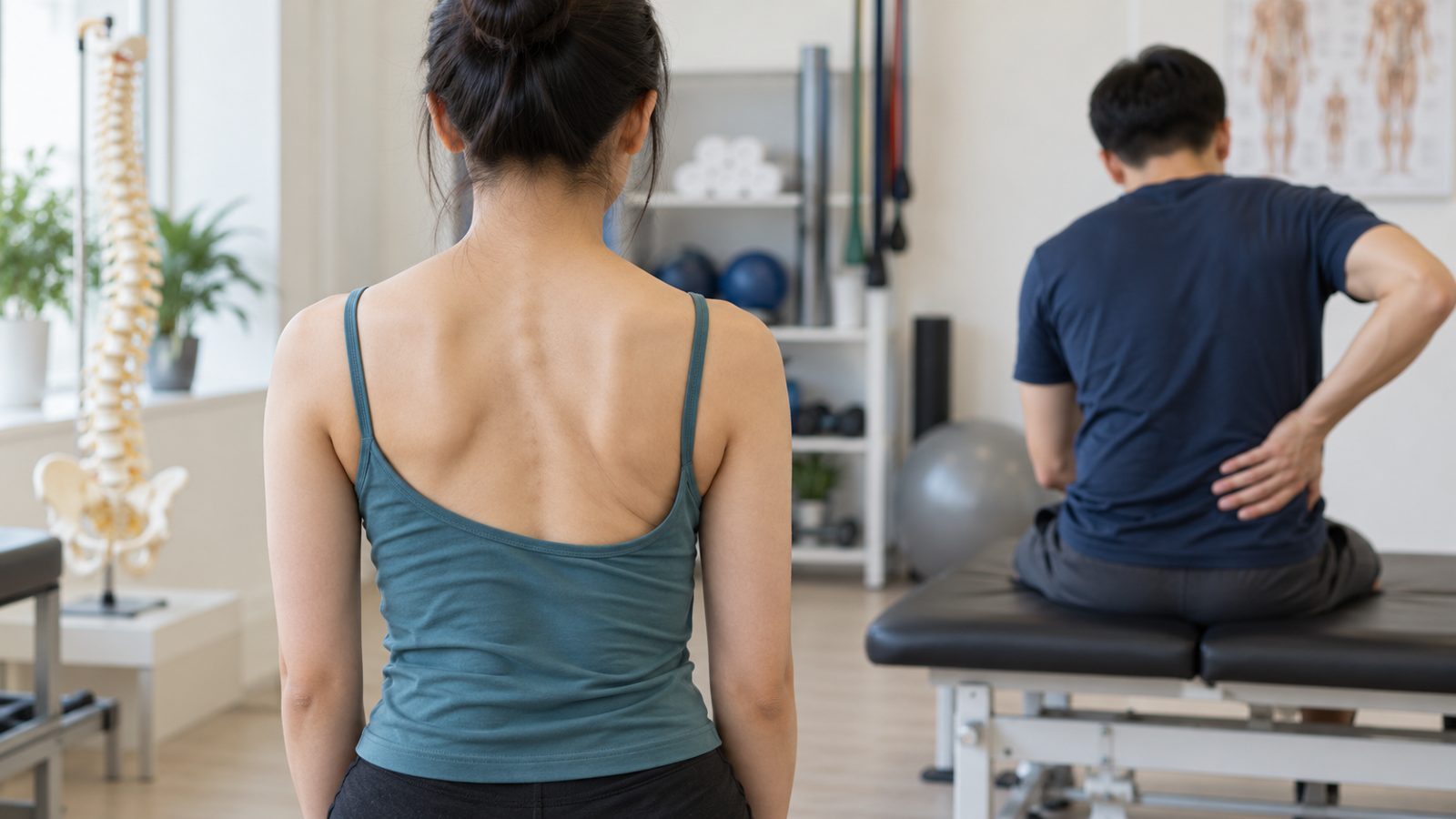
Do you have these symptoms?
- In the mirror, one shoulder sits higher than the other
- When bending forward, one side of the back sticks out more
- The hips are uneven, or one pant leg feels shorter
- From the side, the upper back looks rounded
- Family or friends are the first to say your body looks twisted
Family or friends often notice scoliosis before the person does. Even without pain, get checked if you see any of these signs.
Causes and understanding
- How scoliosis is defined
- Scoliosis is diagnosed when the sideways curve on an X-ray (the Cobb angle, formed by the vertebrae above and below the curve) is more than 10 degrees.
- Most cases have no known cause
- Most cases are idiopathic, meaning there is no clear cause.
- Functional vs. structural scoliosis
- Functional scoliosis comes from posture. It is flexible and the vertebrae are not deformed, but it can stiffen over time. Structural scoliosis may be linked to congenital abnormalities or neuromuscular conditions.
- It can progress during growth
- Adolescent idiopathic scoliosis appears from around age 10 until bone growth ends, and ages 12–16 carry the highest risk of progression. Once bone growth is complete, the chance of progression drops considerably. It is more common in girls.
- Muscle imbalance and breathing patterns
- One interpretation is that asymmetric rotation of the pelvis and rib cage, along with breathing patterns, contributes to compensatory curves. However, research has not confirmed this as a cause.
Assessment from a chiropractic perspective
- Health historyAssessment typically asks about family history, growth stage (first period, whether height is still increasing), and when the curve was first noticed.
- Posture observationShoulder, shoulder blade, and pelvis height, trunk rotation, and head position are usually observed from the front, back, and side.
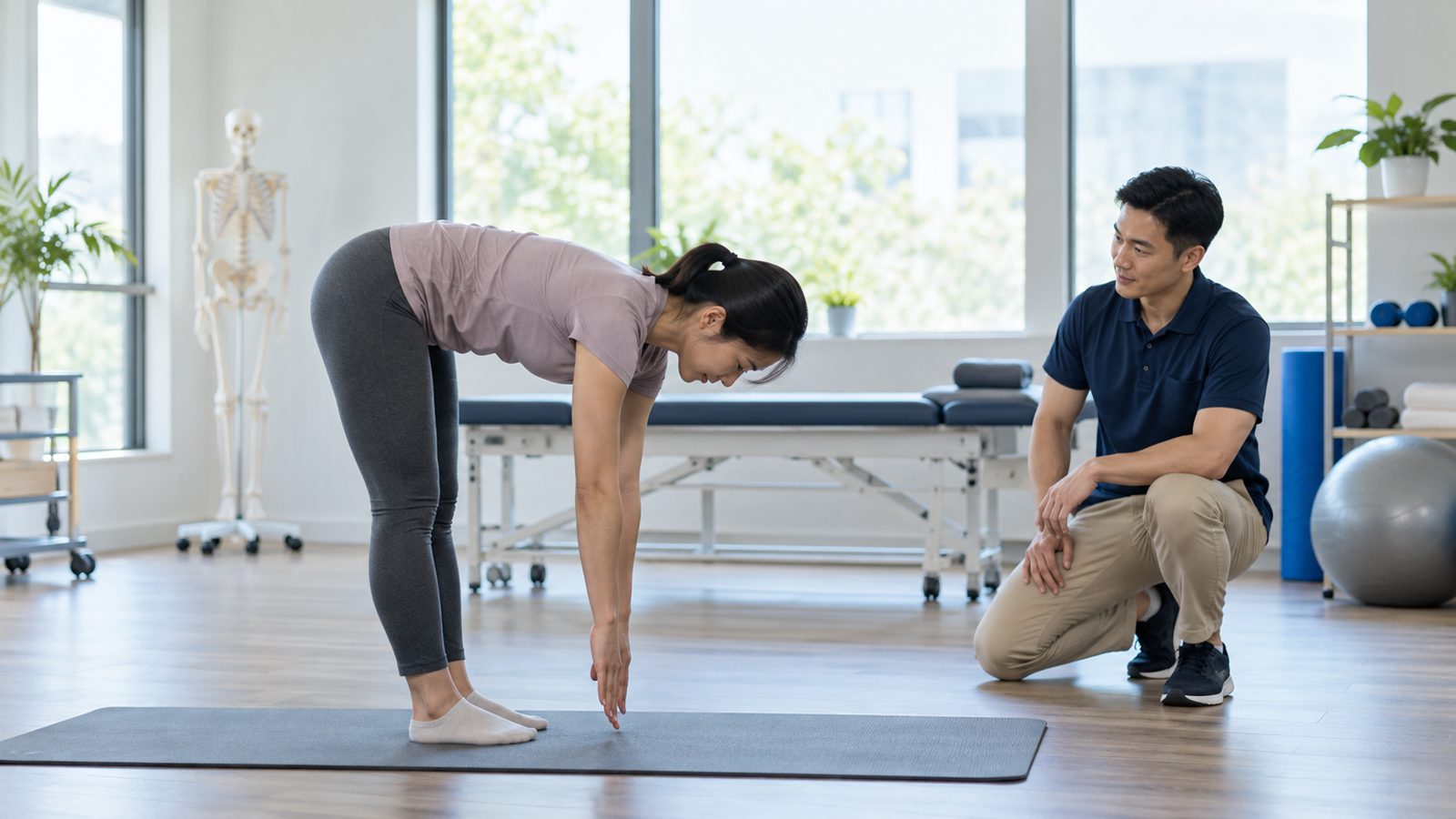
- Forward bend testWith knees straight and arms hanging, the person bends forward 90 degrees so asymmetry of the back can be seen. This test alone has limits for early detection, so it is used alongside other assessments.
- Scoliometer measurementIn the forward-bent position, a trunk rotation gauge (scoliometer) is commonly used to measure the rotation angle of the back.
- ImagingThe Cobb angle is confirmed on an X-ray; taking and reading the images is done by a physician.
- Functional testsSingle-leg balance (joint position sense) and similar functions may also be looked at.
How it's managed
Manual therapyKnown as a way to address movement in stiff thoracic spine, rib cage, and pelvic joints and tension in the surrounding muscles. It is performed by professionals qualified in the relevant country, and whether it is appropriate is decided after an assessment. It does not reduce the curve; it is a way to manage pain and movement.
Scoliosis exercisesKnown exercises choose the direction of thoracic rotation to match the curve. Examples include open book, thread the needle, quadruped thoracic rotation, and rotational breathing. Because the direction can be opposite depending on the curve type, it is usually decided after an assessment.
Exercise volumeA common approach is to start with 2 sets of 5 reps and build up to 3 sets of 7. Doing it often every day matters more than doing a lot at once.
Daily habitsCutting back on habits that put weight on one side only is recommended.
Regular re-checksMeasuring again at set intervals, using the same method, is the usual way to see whether the curve is progressing.
Exercise within a pain-free range, and stop if pain starts.
When to see a doctor first
- The curve is increasing quickly during growth (especially ages 12–16) → orthopedic (spine) specialist
- A decision is needed about bracing or surgery → orthopedic (spine) specialist
- Nerve symptoms such as leg numbness, muscle weakness, or changes in walking are also present
- A congenital abnormality or neuromuscular condition is suspected
Related columns
 When one side of the back rises as your child bends forward
 What is the Cobb angle? How to read the number on an X-ray
 Functional vs. structural scoliosis: what's the difference?Scoliosis at ages 12–16: why regular checks matter during growth
This article is for general health information. Everyone's condition is different, so an accurate assessment requires consulting a professional.