

Sports rehabilitation
If an area injured during sports keeps hurting, or your performance isn't the same after returning, your movement patterns may not have recovered even though the pain is gone. Sports rehabilitation generally assesses movement and sport-specific actions, progresses in stages, and returns to sport after return criteria are met. An accurate assessment should come from a qualified healthcare professional.
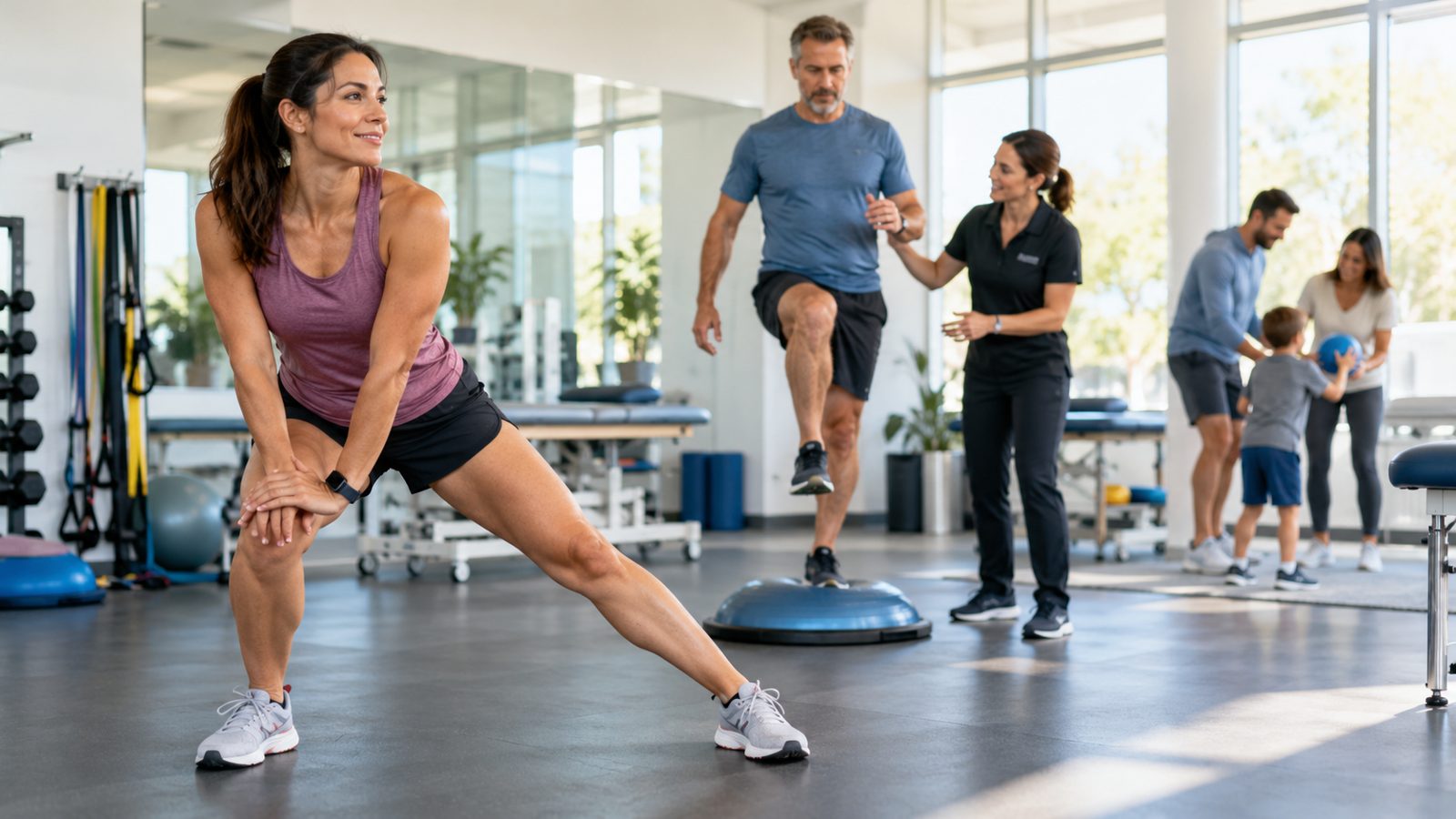
Do you have these symptoms?
- You keep injuring the same area
- It hurts only during or after exercise
- There is no pain, but movements aren't as smooth as before
- After the neck was bent sideways, the arm briefly tingled and went weak
- After returning, the knee feels unstable when changing direction or jumping
A previous injury is known to be one of the main risk factors for injury. Movement can be poor even without pain, and movement can be good even with pain.
Causes and understanding
- Movement pattern problems
- If basic movement has flaws, the skills and strength built on top of it also carry injury risk. That said, good movement does not guarantee injury prevention; strength, endurance, and coordination also play a role.
- Pain is an alarm signal
- Pain signals inflammation or problems with alignment or muscle control. Masking the pain leaves the cause in place.
- Shoulder
- Impingement and instability in weight training, swimming, and throwing sports
- Knee
- Cruciate ligament injuries when changing direction or landing, collateral ligament injuries on contact, meniscus injuries with rotation. Patellar tendinitis in basketball, volleyball, and soccer
- Neck, low back, and hip
- Neck nerve injuries (burners) in contact sports, spinal stress fractures in sports with repeated back bending, and hip stress fractures in running and ballet
Assessment from a chiropractic perspective
- Movement pattern testsThe 7 movements of the Functional Movement Screen (FMS) are commonly used. If there is pain, the principle is to stop screening and move to clinical assessment.
- Region-specific testsAssessment typically includes orthopedic tests for the shoulder, knee, neck, and low back.
- Functional testsFunctional tests such as single-leg hops are used to look at left-right differences.
How it's managed
Exercise within a pain-free range, and stop if pain starts.
When to see a doctor first
- A suspected fracture
- Headache, dizziness, vomiting, or changes in consciousness after a head injury
- Arm symptoms after a neck injury that last more than 24 hours or appear on both sides
- A suspected cruciate ligament tear or locked knee → orthopedic specialist
- A suspected spinal stress fracture → orthopedic specialist
Related columns
No Pain, All Healed? What to Check Before You Return to Sport Why you keep injuring the same spot: movement screening
 From a knee ligament injury back to running
 If your arm tingled after your neck was bent
This article is for general health information. Everyone's condition is different, so an accurate assessment requires consulting a professional.