

A catch in your back when you breathe? The joints where the ribs meet the spine
One spot at the inner edge of your shoulder blade hurts every time you breathe? The rib joints are worth a look.

- If one spot beside the spine, at the inner edge of the shoulder blade, hurts when you breathe or twist, the pain may be coming from a rib joint.
- At the back, each rib meets the spine at two points and moves with every breath.
- If back or chest pain comes on with exertion, or with breathlessness or cold sweats, the heart needs checking first.
When the upper back hurts, people usually think of muscles or discs first. But the thoracic spine has joints no other part of the spine has: the joints where the ribs attach.
Pain like this points to the rib joints
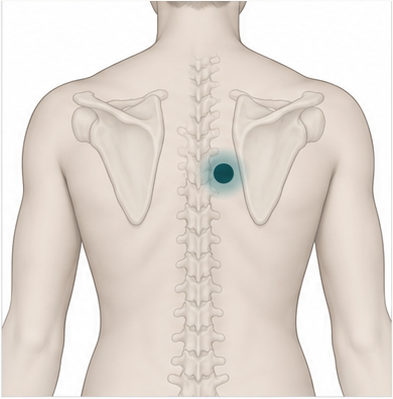
- A catch at the inner edge of the shoulder blade on a full breath in
- A sharp twinge in the same spot when you cough or sneeze
- Worse when you turn or bend to one side
- You can point to the sore spot with one finger
The evidence: pain stays right over the joint
In 2008, Wainner and colleagues made 21 contrast injections into the costotransverse joints of 8 healthy men. The pain was felt directly over the injected joint as a deep, dull ache (average 3.3 out of 10), and it did not spread to the chest or arm.
With only 8 pain-free volunteers, the study can't be applied directly to patients. Still, it suggests rib joint pain tends to gather at one spot rather than spread widely.
Upper back pain is not rare. Across studies, the one-year prevalence of thoracic spine pain ranged from 3.5% to 34.8%, and it was more common in children and adolescents, especially girls (Straker et al., 2009).
See a doctor first if
If the pain comes with any of the signs below, please see a doctor first. The full list is at the end of the article.
- Back or chest pain comes on when climbing stairs or exerting yourself and eases with rest, or comes with cold sweats or breathlessness
- Severe, tearing back pain starts suddenly
- The pain comes with fever, cough, or new breathlessness
Structure: each rib meets the spine at two points
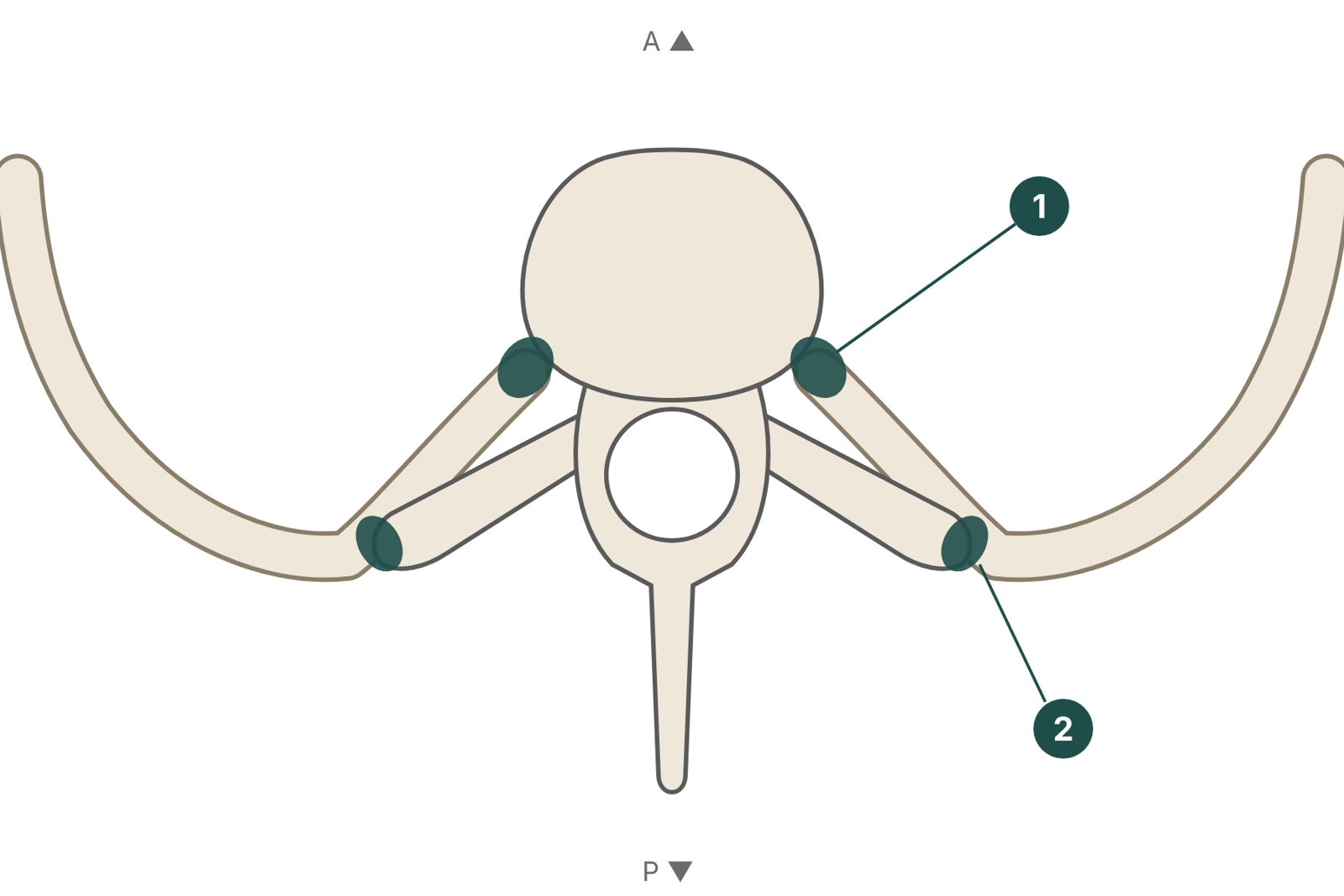
These two contact points hold the rib firmly. They are also one reason the thoracic spine moves less than the neck or lower back: the ribs and rib cage limit its rotation.
The ligaments around these joints don't lock movement; they guide the rib so it moves within its normal range.
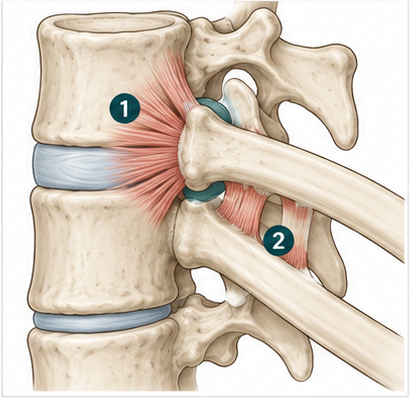
- Costovertebral joint: the rib head rests against two vertebral bodies and the disc between them. Ribs 2–9 articulate with two vertebrae; ribs 1, 10, 11 and 12 with only one.
- Costotransverse joint: the rib tubercle meets the tip of the thoracic transverse process. It exists only for ribs 1–10; ribs 11 and 12 have none.
How the ribs move when you breathe
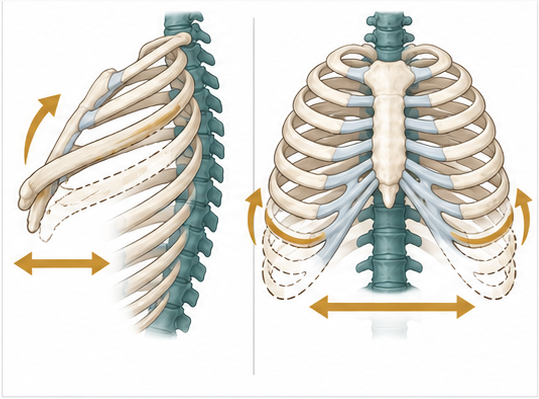
When you breathe in, the diaphragm descends, the external intercostal muscles contract and the ribs lift. So an assessment also checks whether the rib cage expands evenly on both sides during a deep breath.
- Upper ribs: the front ends lift up and forward, widening the chest front to back.
- Lower ribs: the sides lift up and out, widening the chest side to side.
- Ribs 11 and 12: not attached to the breastbone, they mainly move outward and backward.
How an assessment usually proceeds
- ① Rule out non-musculoskeletal causes first: does it get worse with exertion, and is there breathlessness, fever or cough?
- ② Check whether the pain changes with a deep breath, a cough, or turning and bending the trunk.
- ③ Press over the rib angles and transverse processes on both sides of the spine, compare left with right, and match the tender spot to the one the person pointed to.
- ④ Look for a stiff, rounded upper back and a habit of breathing only with the upper chest.
- Back or chest pain comes on when climbing stairs or exerting yourself and eases with rest, or comes with cold sweats or breathlessness
- Severe, tearing back pain starts suddenly
- The pain comes with fever, cough, or new breathlessness
- Pain follows a fall or impact, or starts suddenly in someone with osteoporosis
- There is unexplained weight loss, or pain at night that doesn't ease when lying down
- A red rash or blisters appear on the skin over the painful area
If any of these apply, please see a doctor first. The first two items may need emergency care.
Next time a deep breath catches in your back, point to the spot with one finger and notice which movement makes it worse. Those two facts are where the assessment begins.